
The best way to reduce pet shedding at home is to remove loose fur with consistent, coat-appropriate grooming before it reaches your clothes, sofa, and floors. You cannot—and should not try to—stop normal shedding completely. But a calm routine, the right brush, sensible bathing, and quick cleanup can make the hair far more manageable.
If your dog hides when the brush appears or your cat turns grooming into a wrestling match, you are not failing. Many pets simply need a gentler tool, shorter sessions, and a little time. This guide gives you a practical seven-step routine that works with your pet instead of against them.

Can You Stop a Dog or Cat From Shedding?
No. Healthy dogs and cats naturally replace old hair. Breed, coat type, indoor living, daylight, season, age, and health can all affect how much fur you see. The realistic goal is to manage normal shedding, not eliminate it.
The ASPCA’s dog-grooming guidance explains that regular brushing removes loose hair while helping keep the coat in good condition. Its cat-grooming advice also notes that routine grooming and vacuuming can reduce the inconvenience of shedding.
How to Reduce Pet Shedding at Home in 7 Steps
1. Learn What Is Normal for Your Pet
Start with your pet’s usual pattern. Some animals release hair steadily all year, while others have noticeable seasonal coat changes. A sudden change matters more than a naturally furry week.
Look at the skin as well as the hair. Normal shedding should not leave bald patches, open sores, strong odour, heavy scaling, or obvious pain. If shedding suddenly increases or comes with itching, redness, appetite changes, or low energy, contact a veterinarian instead of trying to solve it with more brushing.
2. Make Grooming Feel Safe
Choose a quiet moment when your pet is relaxed. Let them sniff the tool, begin with one or two gentle strokes, and reward calm behaviour. Stop before they become frustrated. A two-minute session that ends well is more useful than a long session that makes tomorrow’s grooming harder.
For pets that dislike rigid brushes, the Markovax Silicone Pet Grooming Glove turns familiar petting motions into light grooming. Its soft silicone tips lift surface debris and loose hair from dry or damp coats, making it a practical starting tool for brush-shy dogs and cats.
3. Match the Tool to the Coat and the Job
No single grooming tool is right for every coat. Soft rubber or silicone tools are useful for gentle surface grooming, particularly on shorter coats. Slicker brushes use fine bristles to pick up loose fur and work through light tangles, but they should be used with a light hand.
| Problem | Useful tool | Best approach |
|---|---|---|
| Pet dislikes conventional brushing | Silicone grooming glove | Use slow petting motions in short sessions. |
| Loose fur and light tangles | Self-cleaning slicker brush | Brush gently in coat direction; never scrape the skin. |
| Hair already on furniture or in the car | Compact handheld vacuum | Use the brush or crevice attachment on compatible surfaces. |
VCA Animal Hospitals recommends choosing a brush based on coat type and notes that more frequent brushing during a heavy shed can reduce loose hair in the home. See its guide to choosing the best brush for your pet.
4. Brush in the Direction the Hair Grows
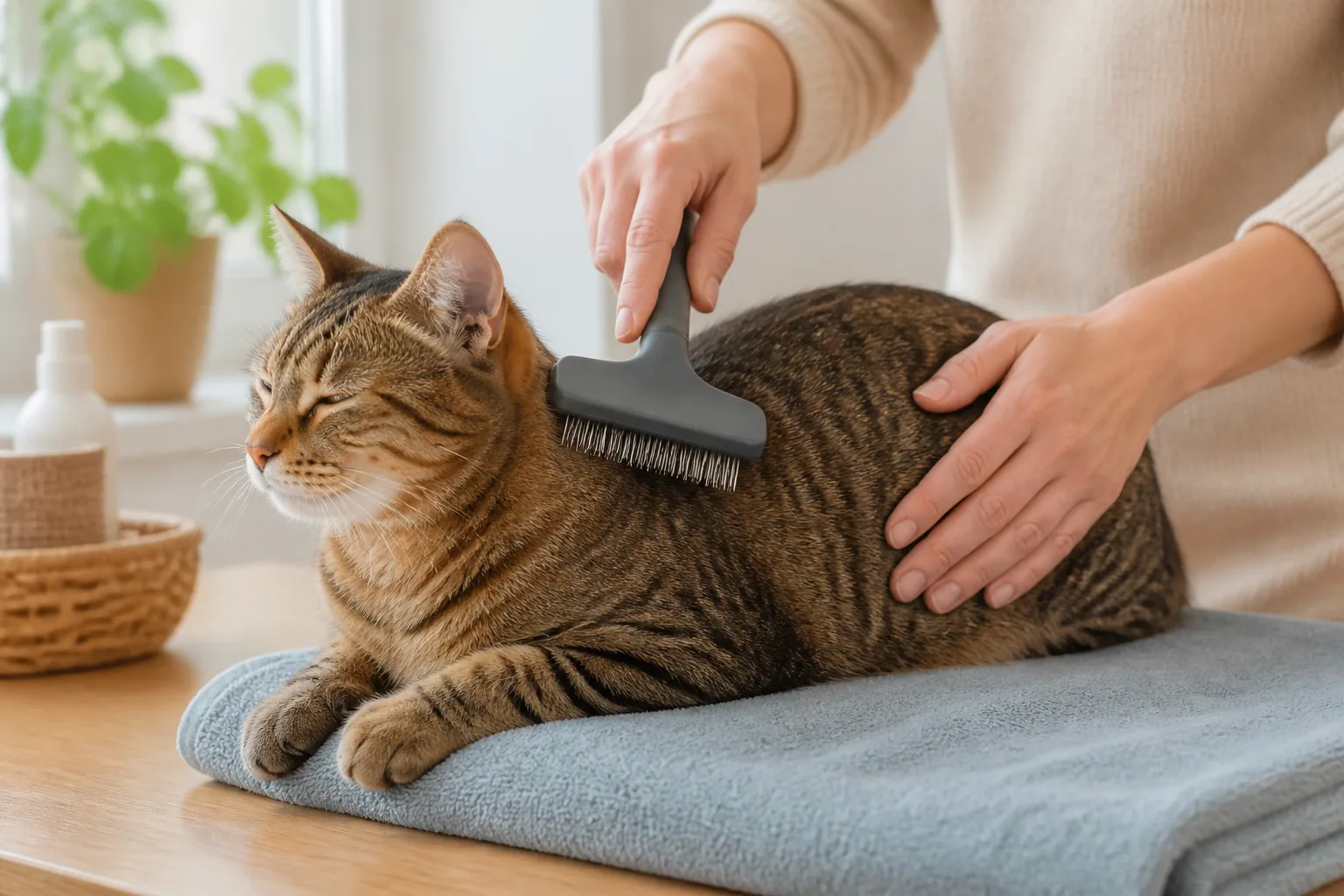
Work in small sections, moving from the shoulders toward the tail. Use gentle pressure and avoid repeatedly brushing one spot. Pay attention to friction-prone areas—behind the ears, under collars, under the front legs, and around the hindquarters—without pulling at knots.
For routine brushing and faster cleanup, the Markovax Self-Cleaning Slicker Brush uses retractable bristles so collected fur can be released with one click. It is designed for dogs and cats and is most appropriate for loose fur and light tangles—not tight mats.
5. Bathe Thoughtfully, Not Constantly
An occasional bath can loosen dead hair and surface debris, but frequent washing or unsuitable shampoo can dry the skin. Use a product formulated for your animal and follow veterinary guidance for frequency. Dogs and cats have different grooming needs; many cats rarely need a bath unless they cannot clean themselves or have a specific medical need.
The American Kennel Club’s shedding guide recommends consistent grooming and choosing tools that suit the dog’s coat. If your pet uses topical flea or tick medication, ask your veterinarian whether bathing affects the treatment.
6. Clean the Places Where Fur Collects
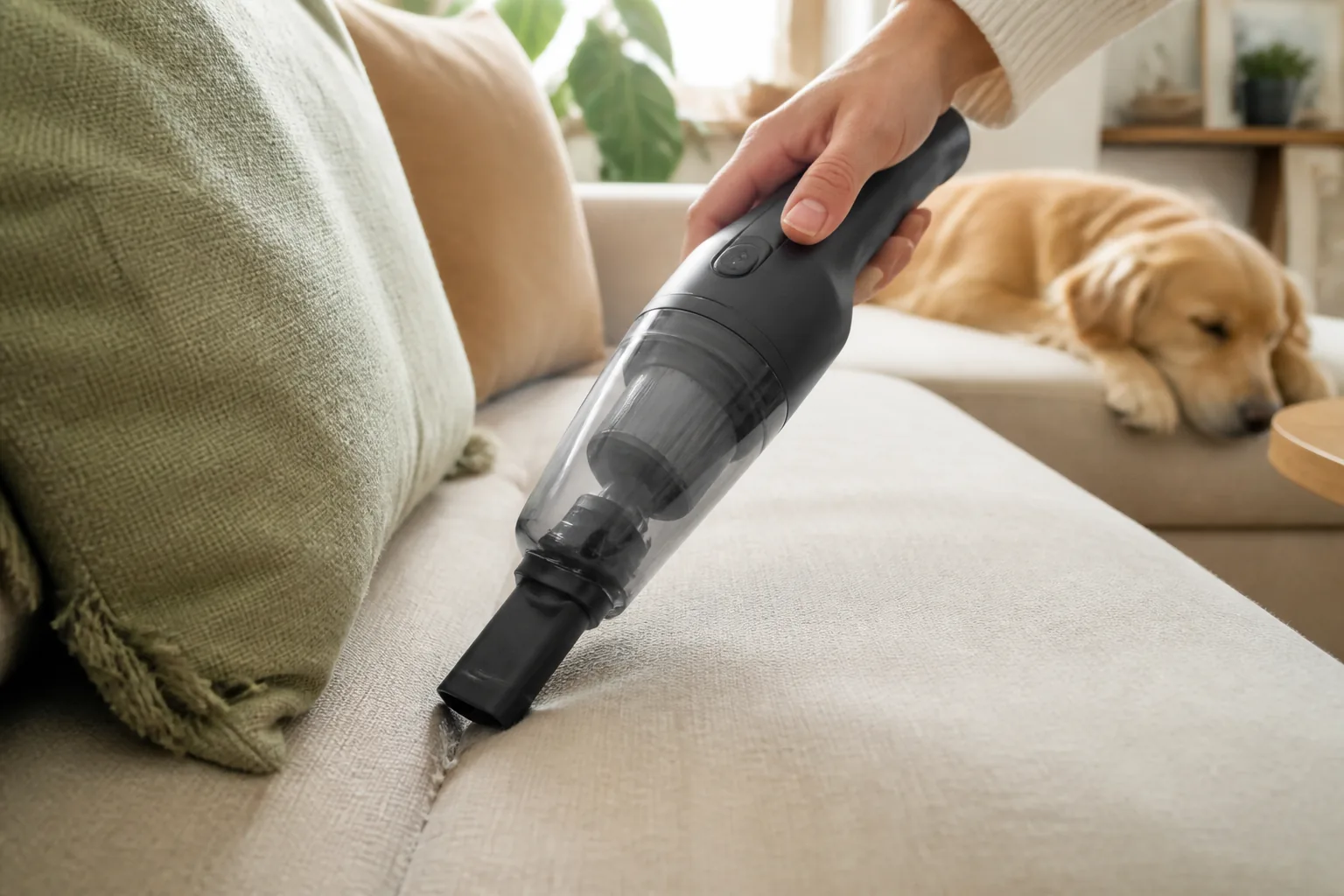
Even a good routine will not catch every hair. Focus cleanup on sofa seams, stairs, pet beds, car seats, and baseboards. Wash removable pet bedding according to its care label and empty vacuum filters regularly so suction does not fall.
The Markovax Cordless Handheld Vacuum Cleaner is compact enough for quick passes over car interiors and small household areas. Use its brush head on suitable upholstery and test a hidden patch first. It complements grooming; it does not replace it.
7. Track Changes and Know When to Call the Vet
Take a quick photo when you notice an unusual patch and note when the change began. Seek veterinary advice for sudden or excessive hair loss, bald areas, persistent scratching, inflamed skin, wounds, parasites, unusual odour, or changes in behaviour or appetite. As PetMD’s guide to controlling pet hair explains, shedding is often normal, but accompanying skin signs may require diagnosis and treatment.
A Simple Weekly Pet-Hair Routine
- Most days: Check the coat and remove visible loose hair with a few calm glove strokes.
- Once or twice weekly: Give a more complete brush suited to the coat, increasing frequency during heavier seasonal shedding if your pet tolerates it.
- Weekly: Wash pet blankets and vacuum favourite resting areas.
- Monthly: Check tools for bent bristles, cracks, rough edges, or trapped debris.
Frequency varies by animal. Long coats, double coats, senior pets, and pets with medical conditions may need a plan from a groomer or veterinarian.
Frequently Asked Questions
Do pet grooming gloves really reduce shedding?
A grooming glove can collect loose surface hair before it falls around the home. It is especially useful for pets that accept petting but resist a conventional brush. It will not stop the natural shedding cycle or remove deep mats.
Is a slicker brush safe for cats and dogs?
It can be when it suits the coat and is used gently. Keep pressure light, avoid broken or irritated skin, and stop if your pet shows discomfort. Tight mats should be handled by a qualified groomer or veterinarian because pulling can hurt and scissors can injure skin.
How often should I brush a shedding pet?
There is no universal schedule. Start with short sessions once or twice a week and adjust for coat type, season, and tolerance. Some long-haired cats and heavy-shedding dogs benefit from more frequent grooming.
Why is my pet suddenly shedding much more?
Seasonal coat changes may be normal, but sudden shedding with bald spots, itching, redness, sores, odour, or behaviour changes needs veterinary attention.
A Cleaner Home Starts Before the Hair Hits the Sofa
Managing pet hair is less about one marathon cleanup and more about a kind, repeatable routine. Start gently, choose a tool that suits your pet, collect loose fur before it spreads, and treat unusual coat changes as a health question—not a housekeeping problem.
Explore Markovax’s pet grooming tools to build a calmer routine for you and your companion.